Why supply chains are the ultimate proving ground for automation-led iPaaS
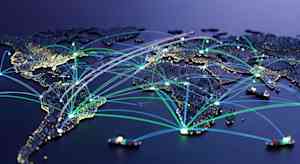
Automation-led iPaaS is finding its most demanding test environment in global supply chains, where traditional middleware has quietly been failing for years. Networks now span hundreds of suppliers running incompatible systems, and the cost of staying with legacy integration is no longer just a technical debt problem — it's an operational liability.
How we got here
For decades, supply chain integration was built on the assumption of stability: fixed partners, predictable schemas, infrequent change. That worked when supply chains were slower and more centralized. Today, partners are added and removed constantly, data structures evolve with new regulations and sustainability requirements, and volatility — tariff swings included — is the baseline operating condition, not a rare exception.
The numbers behind the shift
The global supply chain visibility software market — the exact problem space next-gen iPaaS targets — was estimated at $3.3 billion in 2025 and is forecast to triple by 2034. But visibility alone isn't enough. A 2025 PwC survey found that more than 90% of supply chain leaders are reworking their operating models in response to volatility, and more than half are already using AI in at least some supply chain functions. That combination of structural change and new automation expectations puts the spotlight squarely on integration infrastructure.
The legacy middleware problem list is familiar but worth naming:
- Brittle point-to-point integrations that don't age well
- High costs from custom development and ongoing maintenance
- Scarce specialized IT resources needed for any change
- Separate tools for B2B integrations and internal applications
- Code-dependent data mapping that can't scale
In most enterprise domains, this kind of technical integration debt creates inconvenience. In supply chains, it creates real disruption: shipment delays, excess inventory, and planning decisions built on stale data.
What next-gen iPaaS actually changes
Next-generation iPaaS platforms don't just move integration to the cloud — that's already table stakes. The defining shift is how they handle continuous change. Instead of treating integrations as static assets, they manage them as living workflows. AI-assisted mapping reduces manual effort when schemas change, accelerates partner onboarding, and surfaces errors earlier when they're cheaper to fix. Supply chain data — which mixes structured transactions with semi-structured documents, inconsistent partner conventions, and context-dependent exceptions — is a natural candidate for AI-assisted normalization. Used correctly, AI reduces human effort without removing governance. That balance matters.
Who wins and who should think twice
Organizations with large, high-turnover partner networks have the clearest ROI case. Low-code/no-code configurators, AI copilots, and out-of-the-box connector support shorten migration cycles and are far easier to justify in thin-margin environments. The risk is with companies that underestimate the complexity buried in their current integrations, or that expect AI to solve data governance problems that are really organizational ones. Technology doesn't replace strategy — it amplifies whatever strategy you already have, good or bad.
What this means for the broader industry
The emerging adoption pattern points toward incremental migrations rather than the big-bang transformation projects of the past — something the integration startup market is already capitalizing on. As more global enterprises refresh their integration stacks, automation-led iPaaS will shift from competitive advantage to baseline infrastructure. Supply chains are just the first front. Logistics, manufacturing, and retail will follow the same path over the next three years, and the platforms that prove themselves here will have a significant head start everywhere else.
The question for leaders isn't whether to migrate — it's whether they can afford to keep waiting.
Source: VentureBeat